

Materials from the Land
Yakut knife was born in the harsh environment of Siberia, and its materials reflect this connection to nature. Traditionally, blades are forged from high-quality steel chosen for strength and edge retention. In earlier times, local iron sources were used, while modern smiths may select carefully refined carbon steel.
Handles are commonly made from birch, curly birch, or stacked birch bark. These materials are lightweight, durable, and resistant to cold — an essential quality in extreme northern climates. The natural texture of birch bark also provides a secure grip, even in wet or freezing conditions.
Forging the Blade
The forging process begins by heating steel in a coal or charcoal forge until it becomes malleable. The blacksmith then shapes the blade with controlled hammer blows, forming its distinctive profile.
A traditional Yakut blade often features:
- A straight or slightly curved cutting edge
- A thick spine for strength
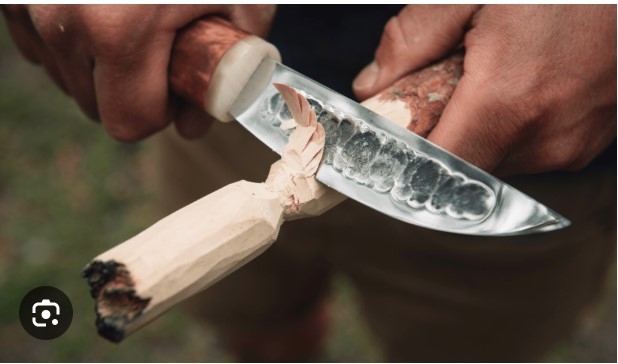
- A characteristic asymmetrical grind (one side flat or slightly concave, the other beveled)
This asymmetrical design improves cutting efficiency and makes sharpening easier — a practical feature for hunters and craftsmen working far from settlements.
After shaping, the blade is hardened through quenching and then tempered to balance hardness and flexibility.
Handle Construction
The handle is carefully shaped to fit comfortably in the hand, usually without a guard. Yakut knife handles are typically longer and oval-shaped, providing control and preventing the hand from slipping in cold weather.
If birch bark is used, thin layers are stacked and compressed tightly before being shaped and polished. This method creates a lightweight yet durable grip that can withstand moisture and temperature extremes.
Traditional Sheaths
Yakut knives are often paired with traditional leather or hide sheaths. Some include a wooden insert to protect the blade. The sheath is designed for safe carrying on the belt, allowing easy access while working or hunting.
The Role of the Blacksmith
In Yakut knife for sale culture, the blacksmith holds a respected position. Crafting a knife is not merely a technical task but a continuation of tradition. Skills are passed down through generations, preserving both practical knowledge and cultural heritage.
Each finished knife represents a balance of function, environment, and identity. It is not simply a tool — it is a reflection of the land and the people who depend on it.