
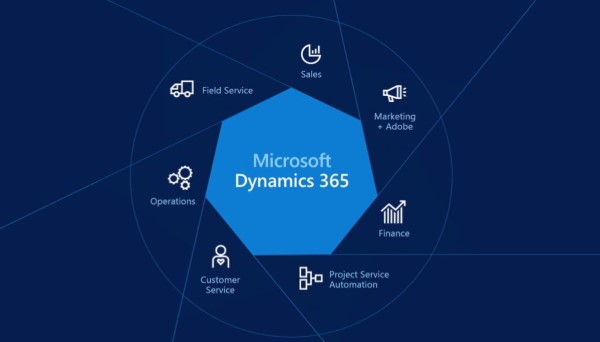
Agility, data visibility, and smooth cooperation are critical for success in the modern workplace. Companies are no longer managing their operations through manual procedures or disjointed systems. Rather, they are using intelligent systems which integrate departmental operations. Dynamics Microsoft, a whole suite of corporate software intended to enhance decision-making, expedite procedures, and boost overall performance, is one such potent option. The gadget enables businesses to quickly adapt to adjustments in the market while preserving performance and control with the aid of combining finance, sales, customer service, operations, and human resources right into a unified environment. It is in particular suitable for corporations seeking out cutting-edge, scalable solutions that promote sustained development due to its cloud-based structure and complicated abilities.
Centralised Operations and Unified Data
The capacity of Dynamics 365 to centralise data throughout the company represents one of its most significant advantages. Departments share a single source of truth, which guarantees consistency and precision rather than functioning in silos. Without having to wait for manual updates or reports, operations management, sales departments, and financial teams may access real-time data. With this integration, errors caused by the outdated information will be eliminated, and unnecessary repetition of work will be minimised. Further, with centralised activities, the leadership obtains a broad picture of the company, and this helps align the plans with organisational goals and performance indicators.
Sophisticated Financial Management
Modern business operations cannot be conducted using basic accounting. Dynamics 365 can be used to automate smart financial gear along with budgeting, spending tracking, and invoicing. Real-time financial reporting offers corporations a risk to screen cash flow, profitability, and their financial health in real time. Integrated analytics may be used to locate developments, predict performance, and make knowledgeable choices. Compliance and audit readiness are also extended via automated file-maintaining and regulatory tracking, which reduces risks and complements transparency within the economic approaches.
High Customer Relationship Management
The demands of the clients have evolved significantly, and to remain competitive, organisations have to offer customised, receptive solutions. Dynamics 365 has powerful client relationship management tools that allow the business to effectively understand and communicate with its clients. The sales teams can better predict revenue and handle pipelines and leads. Customer service agents can access the complete customer histories, quickly solve issues, and provide specialised help. The data-driven insights can assist the marketing team in developing focused programs and monitoring the outcomes in real time.
Operation and Supply Chain Optimisation
Supply chain management is a necessity for businesses in the modern world, especially those that fall in the manufacturing, retail, or distribution sectors. Dynamics 365 is a unified system that can be used to manage production, shipping, procurement and inventory. Delays can be eliminated, and the reduction of excess inventory can be achieved through real-time visibility of the stock and supplier performance. Predictive analytics can enable businesses to make production adjustments and avoid disruption by predicting demand variations. Such characteristics ensure more efficient functioning, lower costs, and client satisfaction.
Robotisation and AI-led Insights
AI is now an extremely important part of modern corporate systems, and Dynamics 365 relies on AI to enhance its decision-making capabilities, along with its efficiency. Embedded intelligence analyses patterns of data to deliver valuable information. As an example, AI can identify potential threats to financial transactions or recommend optimal behaviour to sales representatives. When automated functions reduce repetitive tasks, professionals will be able to focus on strategic operations. The combination of automation and AI enhances productivity and also promotes creativity across the firm.
Scalable and Flexible Cloud Architecture
Expansive corporations require scalability, and thus, the cloud-based Dynamics 365 architecture provides the benefits of scaling without having to invest in hardware. The organisations can add users, features, or modules as their needs change. The cloud environment also allows accessing remote work, and it supports distributed workforces as well as hybrid ones. Constant updates will ensure that firms will be able to enjoy the latest developments and security upgrades without getting inconvenienced. Such adaptability aids businesses in remaining competitive in a fast-changing digital world.
Seamless Relationship with Existing Tools
Another significant advantage is the capability of Dynamics 365 to communicate with other business tools and platforms. It can be readily combined with third-party software, analytics applications and productivity applications to create a smooth digital ecosystem. The background gives workers access to strong corporate information as they work with familiar layouts. Integration will guarantee that the technology offers maximum value through a reduced learning curve and a higher adoption rate.
Better Compliance and Security
In the case of modern organisations, the level of data security is paramount. Dynamics 365 comes with complete security measures such as role-based access controls, data encryption and continuous monitoring. These attributes will ensure compliance with the industry regulations and provide protection to confidential information. Companies will be able to reduce the risk of attacks or unauthorised access to data when handling business-related information, financial data, and customer information.
Conclusion
Dynamics 365 provides an extensive feature set intended to facilitate contemporary company processes in a setting that is becoming more complex. The platform meets the various needs of modern businesses with everything from intelligent financial tools and unified data management to AI-driven analytics and scalable cloud infrastructure.